

Sourcing a Mini Camera: What OEM ODM Manufacturers Expect
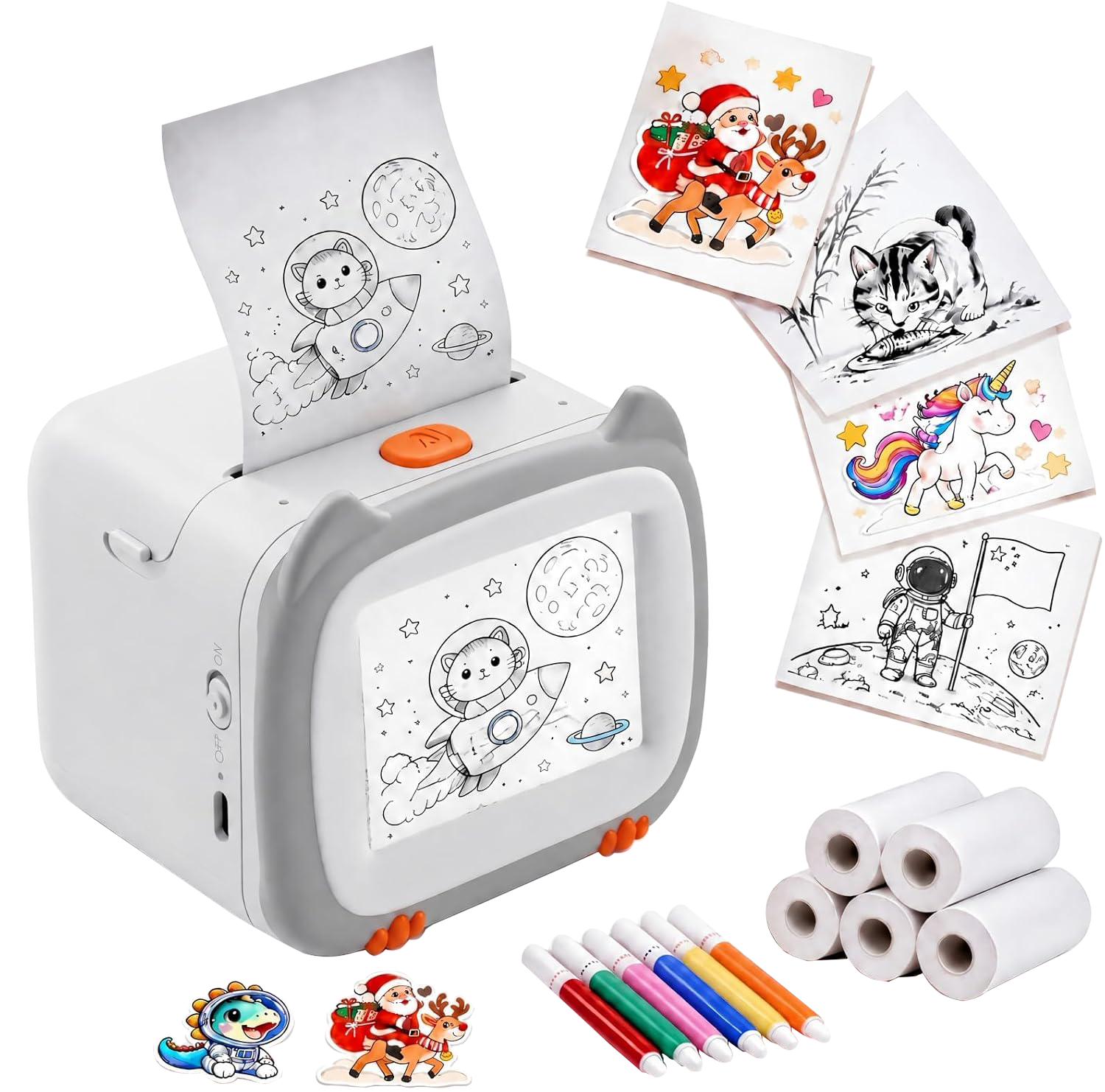
Mini cameras sit in an awkward spot for most buyers. They are small enough that a brand owner can put a logo on them and sell them as an accessory, but they carry enough electronics that the sourcing decisions you make in the first conversation with a factory decide whether the program runs cleanly or turns into a returns problem. This note covers what a mini camera program looks like at the factory end, using the same terms we quote to overseas buyers for our smart camera line alongside the AI voice printer, sticker printer for kids and drawing robot products we build.
What buyers usually mean by mini camera
The category is broad. Under the smart camera line we build sports cameras, mini cameras and AI cameras, and the mechanical and firmware work differs across them. A mini camera in the consumer sense is usually a compact unit sold for everyday recording, and it is often bought as a secondary device rather than a primary one. Buyers come to it from two directions: e-commerce sellers who want a compact, giftable item in the electronics category, and brand owners who already sell related products and want a camera to sit beside them.
Because the definition is loose, the first job is to fix the configuration. Housing shape, mounting method, interface, packaging and firmware behaviour all change the quote. Where a specification is not yet decided, we describe the option set rather than a number, and the price band moves depending on configuration. That is not evasiveness; it is the honest answer when the same enclosure can be built around more than one board and more than one accessory set.
MOQ, price and lead time in practice
For a mini camera program we work to a minimum order quantity of 300 to 400 pieces. That range exists because of setup: moulding runs, board preparation, packaging print and assembly line changeover all carry fixed cost that has to be absorbed somewhere. At 300 pieces the per-unit cost is at its least favourable; at 400 pieces the setup is spread a little wider. Buyers who expect to reorder should say so early, because a repeat schedule changes how we plan mould time and component purchasing.
Unit pricing on FOB Shenzhen terms falls between USD 5 and USD 22 per unit. The spread reflects configuration, not negotiation. A simpler build lands near the bottom; a build with more electronics, a different housing or more elaborate retail packaging moves up. We quote against a written specification so both sides are looking at the same product.
Mass production lead time is about 20 days. That figure starts once the specification and any custom artwork are confirmed, not from the first enquiry. If you are working to a retail launch or a marketplace listing date, work backwards from the 20 days and leave room for the freight leg, because the two together define when stock is actually available to ship to customers.
Shipping and payment terms
We ship by DHL international express. Delivery to the United States runs 8 to 12 days, at roughly USD 8 to 10 per kilogram. Freight is charged on weight, so packaging decisions affect the landed cost as much as the unit price does. A heavier retail box on a small camera adds cost on every shipment, and buyers running tight margin products should weigh that against the shelf appeal of the packaging.
Payment is by T/T, PayPal or Western Union. Which one suits depends on order size and on what your own finance process can handle; we do not treat one as the default for every buyer.
Warranty, certification and the returns loop
All products carry a one-year warranty. The mechanism is straightforward: if a unit fails within the warranty period for a quality reason, the customer ships the faulty unit back at their own cost, and we send a replacement. We do not cover the return freight, and buyers should build that into their after-sales policy before launch rather than discovering it at the first claim. Setting the expectation with end customers at the point of sale is cheaper than managing it afterwards.
Products meet CE, FCC and RoHS requirements, which covers the main compliance questions for the US, EU and Canadian markets we serve. Buyers selling into other jurisdictions should confirm their own local requirements; we will supply the documentation we hold, but we do not certify a product for a market we have not tested it against.
OEM and ODM scope, and how projects actually start
We support OEM and ODM work across brand customisation, packaging customisation and product development customisation. The company was set up in Shenzhen in September 2021 and runs research and development, design, mould making, injection moulding, sales and graphic design in-house, with a team of more than 138 people. Practically, that means an industrial design can move through tooling and moulding into mass production without the project being handed between unrelated suppliers, which is usually where schedules slip.
A typical mini camera project starts with a short brief: what the product is for, who buys it, what the packaging needs to say, and whether the housing is ours or yours. From there we quote against the specification, confirm the MOQ and the 20-day production window, and agree artwork. Buyers who also carry an AI voice printer, a sticker printer for kids or a drawing robot in their range often combine categories in one shipment to make the freight weight work harder.
- Confirm the configuration in writing before tooling or artwork begins.
- Plan the launch date around 20 days of production plus 8 to 12 days of DHL transit to the US.
- Decide the after-sales policy for the one-year warranty before the first sale, including who pays return freight.
- Check certification needs for each market you sell into, not just the largest one.
None of this is complicated, but each item is cheaper to settle at the quoting stage than after the cartons are on a plane.
