

AI Voice Printer Sourcing: What Buyers Should Know
Why the AI voice printer is moving from novelty to shelf space
Buyers who walk the Shenzhen electronics halls this year will notice a shift in the small printer category. The plain thermal printer is still there, but the units drawing attention have a microphone, a speaker and a firmware stack that responds to spoken input. The AI voice printer combines voice recognition, mobile printing and study-support functions such as printing wrong answers from practice work, and that combination is what is pulling it into overseas education and home use rather than keeping it a gadget-shop item.
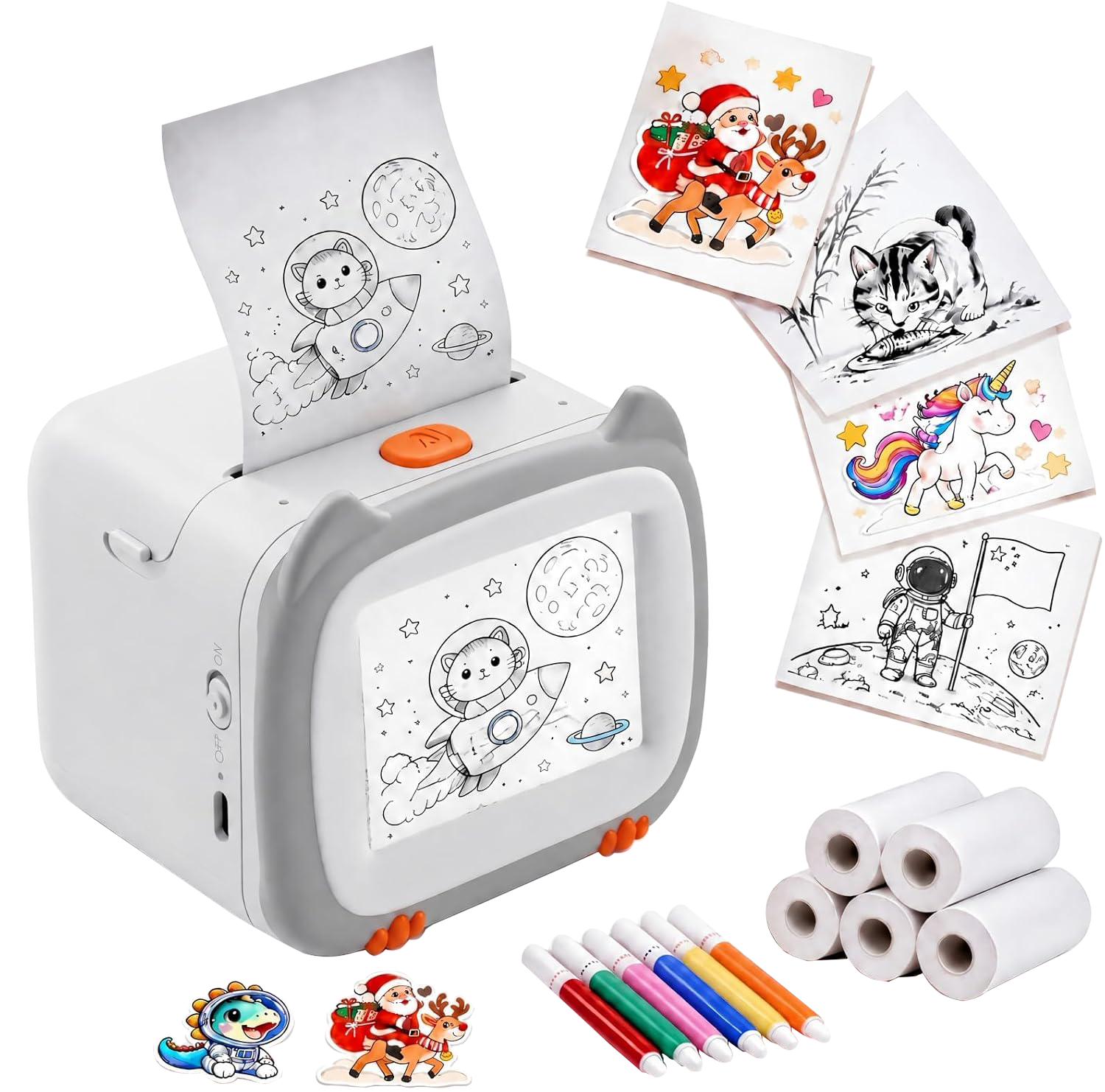
JPHUI has been building in this category since the company was founded in Shenzhen in September 2021. The team of more than 138 people covers research and development, industrial design, tooling, injection molding, sales and graphic design, which means a buyer can move from an ID sketch to a molded housing and a finished unit without handing the project between three suppliers. The product line also includes a sticker printer for kids, a drawing robot and a mini camera, so a brand can build a small range around one supplier relationship instead of one SKU.
This article is written for overseas buyers, brand owners and e-commerce sellers who need to know what is realistic before they place a first order. Prices and lead times below are the working figures we quote; anything that depends on the chosen configuration is flagged as such.
What the category actually contains
The AI voice printer is a portable thermal printing device with voice playback and voice interaction built in. Spoken input is handled by the on-board firmware and the companion app, and the print output is thermal, so there is no ink or toner in the supply chain. The study angle matters commercially: a parent buying for a child at home is a different buyer from a school procurement officer, and the packaging, manual and app onboarding should reflect which one you are targeting.
The sticker printer for kids sits in the same family but is positioned differently. It is a lower-cost entry point, it sells on gift and back-to-school shelves, and it usually carries a smaller accessory set depending on configuration. The drawing robot is a separate line: it is a desktop unit that draws, and it appeals to the same household buyer but through a different use case.
The mini camera line, which includes action cameras, mini cameras and AI cameras, is often bundled into the same brand portfolio. Sellers who already run a kids' electronics storefront tend to add one or two camera SKUs alongside the printer range rather than launch a single product.
What we do not publish, and what you should be skeptical of from any supplier, are accuracy percentages, page counts per charge or print-width figures quoted without a configuration sheet. Those numbers move with the chosen module and firmware build. Ask for the configuration sheet for the exact SKU you are considering.
MOQ, pricing and lead times
The numbers a buyer needs first are the commercial ones. Our minimum order quantity is 300 to 400 pcs per model, and mass production runs about 20 days after the order and artwork are confirmed. FOB Shenzhen pricing falls between USD 5 and USD 22 per unit, and where a specific model lands in that band depends on configuration: the printing module, the voice hardware, the enclosure finish, the accessory set and the retail packaging all move the cost.
For a first order, most buyers start at the lower end of the MOQ range with one hero SKU and a second model in smaller volume, then scale the winner. That approach keeps the initial tooling and packaging spend contained and gives you real sell-through data before you commit to a full container.
- MOQ: 300-400 pcs per model
- Mass production lead time: about 20 days
- FOB Shenzhen: USD 5-22 per unit, depending on configuration
- Payment: T/T, PayPal or Western Union
- Compliance: CE, FCC and RoHS
- Warranty: one year
Payment terms are T/T, PayPal or Western Union. We hold a Hong Kong HSBC USD account, which keeps settlement straightforward for buyers who invoice in US dollars. Sample orders are handled before mass production so the buyer can approve the print quality, the voice playback and the packaging before the line starts.
Shipping and after-sales, in plain terms
We ship internationally by DHL. Delivery to the United States runs 8-12 days, and freight is roughly USD 8-10 per kg. That rate is a working figure for parcel freight, not a landed-cost guarantee; the final number depends on the actual carton weight and the destination address. Buyers shipping to the EU and Canada should ask for a quote on the same basis before they set retail pricing.
The warranty is one year. If a unit fails within that period because of a quality issue, the customer ships the faulty unit back at their own cost, and we send a replacement. We do not cover return freight, and we do not offer compensation terms beyond the replacement itself. Put that in your listing terms in plain language so the buyer knows what to expect before purchase.
Certification is a practical matter rather than a marketing line. The products carry CE, FCC and RoHS, which covers the main requirements for the US, EU and Canadian markets we serve. If your channel asks for additional documentation, raise it at the quotation stage so it can be handled before production.
OEM and ODM: what a buyer can actually change
The reason to work with an OEM ODM manufacturer that owns tooling and molding is control over the parts of the product that carry your brand. We support brand customization, packaging customization and product development customization. In practice that means your logo and colors on the housing and the retail box, your manual and insert set, and, on the ODM side, changes to the enclosure, the accessory set and the firmware presentation.
Because the mold shop and the injection molding machines are in-house, an enclosure change does not sit in a queue at a third-party tooling house. The path from industrial design to a molded sample to mass production runs through one team. Tooling lead time varies with the complexity of the part, so it is quoted per project rather than published as a fixed number.
A realistic OEM project looks like this. The buyer sends reference units, target retail price and channel requirements. We return a configuration proposal and a quotation inside the USD 5-22 FOB range, with the MOQ at 300-400 pcs. Samples are built and approved. Mass production takes about 20 days from confirmation, then DHL delivery of 8-12 days to the US. The buyer handles the retail launch with a unit that carries their brand, not ours.
If you are weighing an AI voice printer, a sticker printer for kids or a drawing robot for the next buying cycle, the useful first step is a configuration sheet and a sample, not a catalog. Send the target price and the market, and the rest can be worked out against real numbers.
